

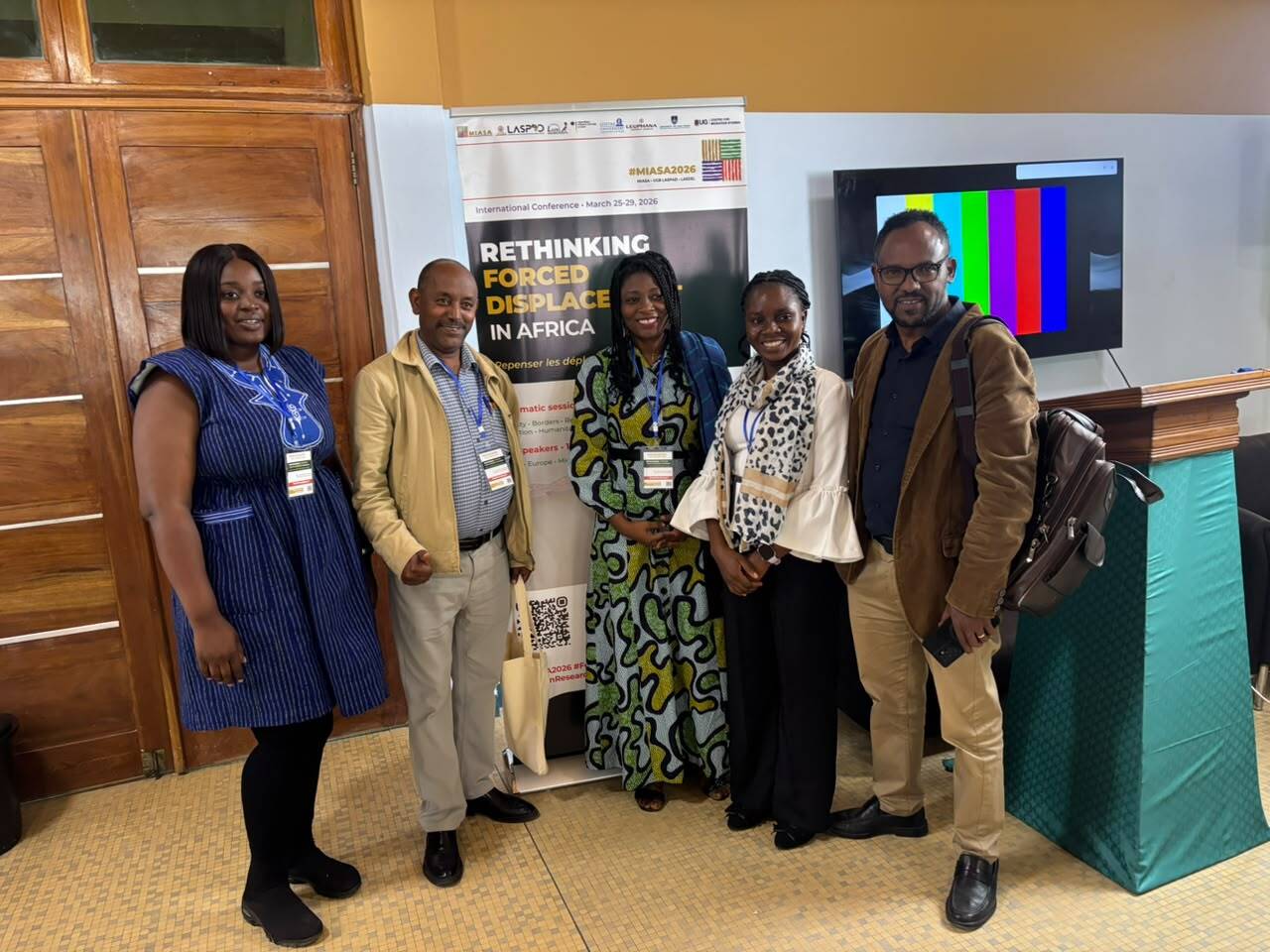

My visit to Senegal was an opportunity to engage with research on forced displacement, meet scholars working on related questions and present my research to a community of experts for critical feedback. It was my first visit to the country, and participating in the conference in Saint-Louis gave me the opportunity to connect with researchers from different institutions and hear perspectives that challenged me to think more deeply about my own work.
The conference was held from 26 to 28 March in Saint-Louis, Senegal. I participated in a panel titled “Transition from Citizen to Refugee Status, Statelessness” on 27 March. The panel brought together scholars examining displacement, refugeehood, migration, citizenship, statelessness and exclusion from different perspectives. Other presentations considered the African refugee regime, displacement crises, migration management and the politics of displacement. The discussions provided an enriching space to share ideas, receive feedback and reflect on possible directions for my research.
I presented my research, From Displacement to Deprivation: Inequalities in Health and WASH Access Among Displaced Persons in Ghana and Sierra Leone Using an Urban Political Theory Lens. The study does not simply ask whether displaced persons have access to water, sanitation and hygiene (WASH) infrastructure. It examines the barriers that shape this access, including structural constraints, marginalisation and the power relationships that influence how urban resources are distributed and controlled.
A central question in the research is who decides who has access to basic WASH facilities? Who determines where refuse is disposed of? Who decides who can use particular bathrooms, where people can access water and sanitation facilities, and under what conditions? These questions are important because the existence of infrastructure does not necessarily mean that everyone has equal access to it. Access can be shaped by the people and institutions that control these resources.
The financial cost of accessing sanitation facilities also raises important questions. Research by Awumbila and others (2014), for instance, found that residents in informal settlements may have to pay to use toilet and bathroom facilities. This becomes particularly concerning for displaced persons who may already face limited livelihood opportunities and other economic pressures. If access to essential WASH services depends on the ability to pay, then the burden falls more heavily on people who are already experiencing forms of social and economic exclusion.

My research findings highlighted how these inequalities operate in everyday life. Where refuse is disposed of and how long someone can use a bathhouse can be determined by the individuals who control these facilities. Local government actors can also influence sanitation practices within communities. These experiences show that WASH access is not simply an infrastructure problem. It is also connected to questions of power, governance, accountability and whose needs are considered in urban planning.
This is why displaced persons need to be included in urban development planning from the onset. WASH resources and services should be considered when planning for communities where displaced populations live, rather than treating their needs as an afterthought. Marginalising displaced persons to the peripheries of urban settlements can deepen inequalities in access to essential services and make their everyday experiences of displacement more difficult.
The conference gave me the opportunity to place these findings within wider discussions on forced displacement in Africa. Listening to scholars working on refugeehood, statelessness, migration governance and displacement helped me to see how questions of access to basic services connect with broader processes of exclusion. The feedback I received has also given me areas to think about as I continue developing the research.
For me, the Saint-Louis conference was therefore an important research experience. It provided a space to present my work, engage with scholars from different backgrounds and critically reflect on the questions that emerge from studying the everyday experiences of displaced persons. It has strengthened my interest in examining displacement beyond the immediate movement of people and paying closer attention to the inequalities that shape their lives in the places where they settle.
- Log in to post comments