

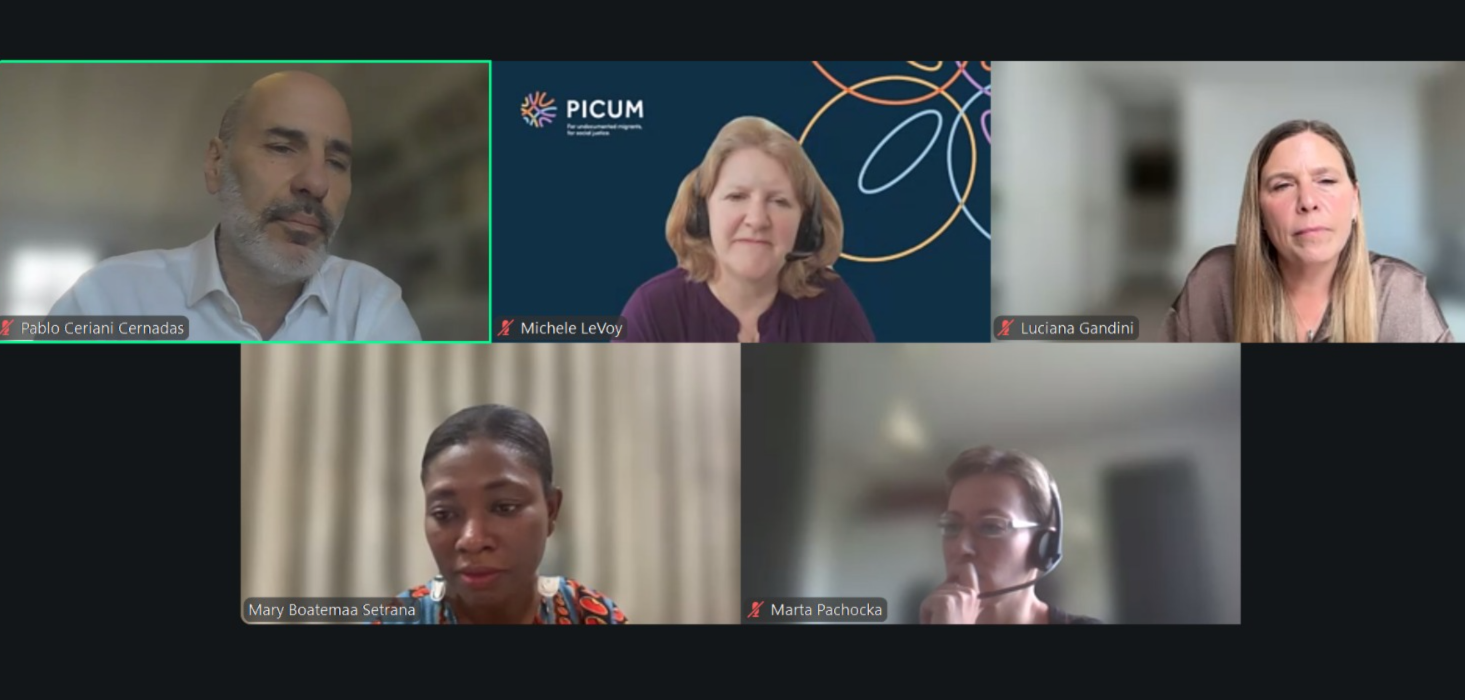

The Metropolis International Migration Network, in partnership with the International Development Research Centre (IDRC) Research Chair on Forced Displacement in Anglophone West Africa at the University of Ghana and other academic partners, convened a cross-sectoral dialogue on the externalisation of migration governance and its implications for the right to asylum in commemoration of World Refugee Day 2026.
Held on 17 June 2026, the webinar, titled “Externalisation of Migration Governance and its Impact on the Right to Asylum”, brought together leading voices from academia, policy and practice to examine how changing approaches to migration governance are reshaping access to asylum, refugee protection and the rights of migrants and displaced populations.
The dialogue marked the launch of a new cross-sectoral webinar series by the Metropolis International Migration Network, creating a platform for sustained engagement on pressing migration issues.
The initiative comes at a time when governments across different regions are increasingly adopting policies that extend migration controls beyond their territorial borders through partnerships with countries of origin and transit, third-country arrangements and other forms of externalised migration management.
The session was co-led by Prof. Mary B. Setrana of the University of Ghana, IDRC Research Chair on Forced Displacement in Anglophone West Africa, and Prof. Pablo Ceriani Cernadas of Universidad Nacional de Lanús, Argentina.
It was organised in partnership with the Global Migration Institute at Toronto Metropolitan University, the Centre for Migration Studies at the University of Ghana, Universidad Nacional de Lanús and SGH Warsaw School of Economics.

The panel featured Gehad Madi, UN Special Rapporteur on the Human Rights of Migrants; Amb. Amma A. Twum-Amoah, Commissioner for Health, Humanitarian Affairs and Social Development, Ghana; Michele LeVoy, Director of PICUM; and Luciana Gandini of SUDIMER, UNAM.
Their perspectives brought together international human rights, policy, research and civil society experiences to examine the increasingly complex relationship between migration control and international protection.
Discussions focused on the implications of externalisation for the right to seek asylum and the principle of non-refoulement, as well as questions of accountability, responsibility-sharing and access to effective protection.
Participants reflected on the consequences of moving aspects of migration control and asylum management away from the territories of destination countries and the potential implications for people seeking international protection.
The dialogue also situated externalisation within broader global shifts in migration governance. As states seek to manage migration before people reach their borders, migration control is increasingly being shaped through bilateral and multilateral agreements, border cooperation, readmission arrangements and other mechanisms involving countries of origin and transit.
The conversation therefore raised important questions about how international cooperation can be pursued without weakening established standards of refugee and human rights protection.
For the IDRC Research Chair, the dialogue provided an opportunity to bring research and African perspectives into a global conversation on changing migration governance.
It also strengthened the Chair’s engagement with the Metropolis International Migration Network and its international partners, creating further opportunities for research collaboration, knowledge exchange and policy engagement on forced displacement and migration governance.
The partnership is particularly significant as the University of Ghana prepares to host the 2026 Metropolis International Migration Network Conference in Accra from 18–20 November.
The conference, themed “Rethinking African Mobility: Past Lessons, Present Realities, Future Possibilities”, will bring together scholars, policymakers and practitioners from across the world to examine emerging migration trends, policy challenges and opportunities for mobility-driven development.
The World Refugee Day dialogue therefore served as an important precursor to these wider engagements, helping to strengthen connections among researchers, policymakers and practitioners working across different aspects of migration and forced displacement.
For the Metropolis International Migration Network and the IDRC Research Chair, the engagement reaffirmed the importance of sustained cross-sectoral dialogue in responding to evolving migration realities.
It also highlighted the need for migration policies to balance legitimate governance objectives with international obligations to protect the rights and dignity of refugees, asylum seekers and migrants.
The dialogue provided a timely contribution to the 2026 World Refugee Day observance while advancing a broader conversation on how migration governance can be shaped through international cooperation, evidence and human rights-based approaches.
It further laid the foundation for continued collaboration among the participating institutions as they work towards strengthening research, policy dialogue and practice on migration and forced displacement globally.
Watch the Webinar: "Externalisation of Migration Governance and its Impact on the Right to Asylum"
Read more articles
- Log in to post comments